





Dr. Heba Hariri on Trauma Memory and EMDR in Saudi Arabia
Dr Heba Hariri discusses trauma, EMDR, and the realities of psychotherapy in Saudi Arabia, where clinical practice is shaped by both global methods and local cultural context.

Few areas of psychology are currently spoken about with as much certainty — and as much confusion — as trauma. The word now moves easily between clinical settings, social media feeds, self-help language, and everyday conversation, often describing experiences that range from catastrophic violence to the quieter accumulation of fear, instability, neglect, or emotional exhaustion.
As the language surrounding trauma expanded, so too did the therapeutic models attempting to treat it. EMDR — short for Eye Movement Desensitization and Reprocessing — emerged as one of the more debated and fast-growing approaches within that field, particularly for its focus on how distressing memories continue to shape the body, emotions, and nervous system long after an event has passed.
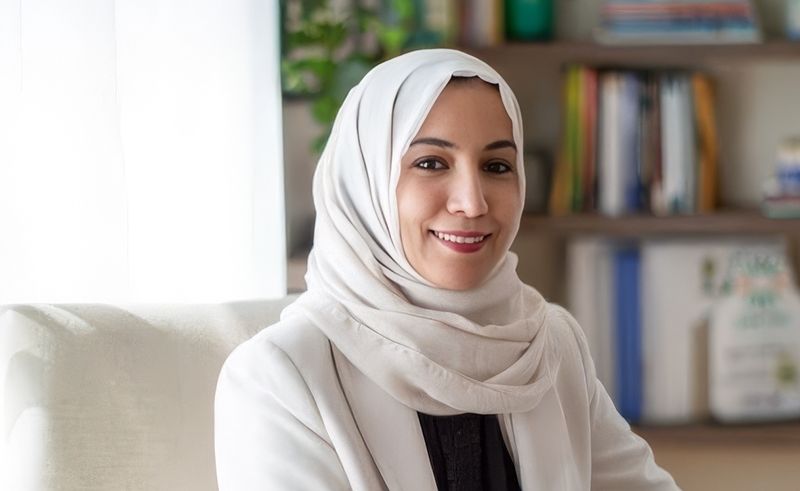
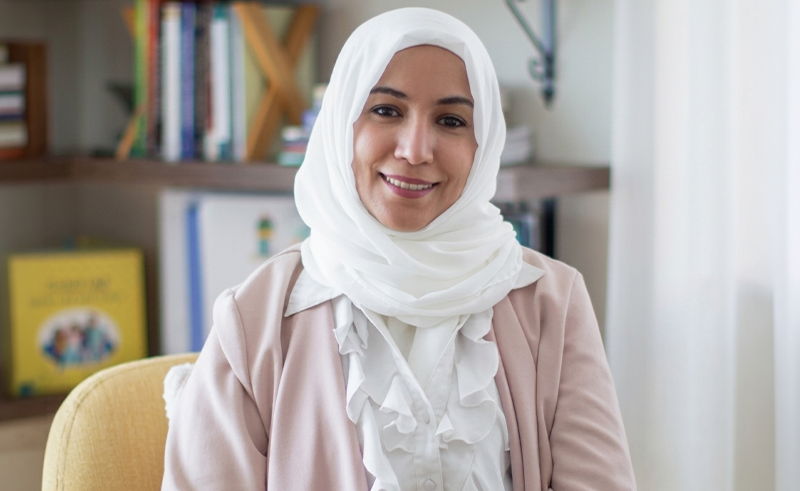
Dr. Heba Jamal Hariri has spent years working within that landscape. A Saudi psychologist trained in the United States, Hariri is an EMDRIA-certified therapist, associate professor at the University of Jeddah, and among the earlier practitioners to introduce EMDR into clinical work in Saudi Arabia. Across this conversation, she speaks not only about the mechanics of the method itself, but also about the larger ecosystem surrounding it: the limits of symptom-based treatment, the distortions of pop psychology, the cultural negotiations involved in practising therapy in Saudi Arabia, and the growing appetite for psychological language in a society still defining what to do with it.
 You trained in the United States before coming back to Saudi Arabia. How did that experience shape you and your approach to psychotherapy.
So, training in the US exposed me to evidence-based practice and, you know, I mean, that field, the mental health field in the US, is more advanced than in the Middle East, and specifically the Arab region, and more specifically in Saudi Arabia.
So, it's very hard here in Saudi Arabia to find a supervisor who’s been practising for 30 years, but very common and very easy to find a supervisor who's been practising for more than 40 years. So the mental health field there, vis-à-vis training, supervising the methodology, it's much more solid, more advanced, compared to here. So that helped me a lot in shaping my skills, and to look at the cases and the clients with more depth. And so, mainly in the Arab region, or specifically in Saudi Arabia, we usually only focus on the symptoms and how we can get rid of these symptoms, either by medication or just changing the thoughts by CBT. Whereas in the US, I have learned that when we look at the case, we look very deeply to see the clients from many aspects: their culture, background, ethnicity. How does that impact them? And I mean, many details that I have been trained in that helped me to to work deeply with the clients, and being more sensitive, I mean with the culture, with, I mean family system, values, and all of these, not only the symptoms. So, yeah, maybe that's the main thing that helped me there in the US.
 I know that you do clinical work, but you also contribute to academia and public education as well. How do these different roles intersect when it comes to your day-to-day work?
It's very deeply interconnected. And actually, all these areas that I’ve worked in, they helped me individually and together. For example, when I sit as a psychologist with the clients, and I see them struggle with, let's say, a specific kind of trauma, like sexual trauma. That automatically raises a lot of research questions in my head, and I work on it as a researcher, and through that, I gain valuable knowledge. Then I share it with my students, especially masters students.
I take all these pieces that I collected, either in research or clinical work and reading, and I help other therapists, because I also supervise other therapists here in Saudi Arabia. So I help them to apply, let's say, what I have gained from knowledge and experience through my research work, through my clinic and academia work. So it's like building blocks. So, it's helped a lot to feel like I’m not just working in one area. I see myself with all these different areas, I can bridge the gaps between these areas.
Before we move on any further, I think it's very important for us to define what EMDR is, because there are still a lot of people who aren’t familiar with the practice and what it's like. So if you could, in your own words, define EMDR for us.
EMDR stands for “Eye Movement Desensitization and Reprocessing.” So, simply, any disturbing event we are going through, or have gone through, is either a Trauma with a capital T, such as a near-death experience, or even if it just means feeling neglected, abused, or living in a condition that threatens your mental or social health.
So all these different memories begin to get stored in differing ways, either as a physical sensation or thoughts or feelings; it gets stored in the body, and that's one of the misconceptions that a lot of people have, when they say things like “Elli fat mat.” But the past is certainly not dead as such, it’s just moved to a different area. It’s saved in our unconscious, and that actually shapes people in how they see life, how they perceive and react to things.
EMDR will gently bring up all these disturbing memories from the unconscious to the conscious by eye movement, and it will help digest it. I feel the word “digest it” is much easier for people to understand. Memories are often stored in unhealthy ways and they begin to impact us negatively, but we bring it up in our conscious time with different tools and psychological processes. And it's not an easy process. We have to bring it up safely, and then we help the client to reprocess it again — to “redigest” it and save it in a safe way.
So, we can’t change the past, but we can certainly change our view of it. We can put these memories in a safe place within us, and we can clean up any distorted beliefs, or, let's say, painful feelings or triggers that usually get activated.
I’m interested to know why you decided to go into EMDR, as opposed to other more traditional therapeutic approaches like CBT, DBT, or others?
So, EMDR actually integrates many therapeutic methods and approaches. It has a CBT, it has a DBT, it has Somatic Therapy, it has IFS (Internal Family Systems therapy). It also has dynamic analytics. So you can find all these kinds of therapies within EMDR.
I never went into CBT because I always believed that, yes, if we change the thoughts, automatically, we can change the feelings, and then we can change the behavior. But what if my thoughts actually do make sense? In other words, what if the world really is scary? What if, say, the abuser is living with me? So, a lot of thoughts are not easy to change. Humans are very complicated, and we are deeper than just thoughts. So, EMDR integrates all of this, and that's why I like it.
EMDR also works for a lot of people. People who like to focus on their feelings— they should do EMDR. People who are very sensitive physically— EMDR works well with them, too. In addition to that, I've been trained in different kinds of methodologies to help people, especially traumatized people, because I worked a lot with these clients, especially in the US. I’ve worked a lot with Iraqis, Afghanis, victims of war, and I’ve found that EMDR is the fastest way to help people recover from trauma.
You were among the first people to introduce EMDR to Saudi Arabia, and, admittedly, it's still a very nascent field, not just in Saudi Arabia, but in many countries the world over. What did the landscape look like at the time when you began introducing it to Saudi Arabia? What was the reception from your peers and clients?
It was very ambiguous. In the beginning, they didn’t really get it, and there was always this reaction of curiosity mixed with some hesitation and confusion. But what I like to do, usually, is to start with the psychoeducation. I tell people: “I’m not going to deal with the surface level,” and this I explain very well, especially before they come to me. Usually I have a consent form that I send to them with a package explaining exactly what it is I do.
And I know that what I do in therapy is very different than most other therapists. Most other therapists here in Saudi Arabia work with CBT. Recently, DBT has also become another common tool. But a lot of people cannot heal from CBT or DBT, because it doesn't work with all clients, especially ones who have very long, harsh lives with lots of challenges, some of which are still activate. They also know that I don't deal with just the symptoms; I don’t say: “Well, you know, you have 1, 2, 3 symptoms, and I’m here to get rid of them.” We are not machines, we are humans. Again, we’re very complicated.
So, when we’re just starting out, I will often say: “tell me about your life from the earliest memory, and we will puzzle it out together. I will make sense of it and your memories, your relationships, your family dynamics, your thoughts.” This the first phase of therapy, and it’s how clients start to become aware that they’re not just feeling “sad” or “down.” It's more than this. It's deeper than this. This is one major area where EMDR proves to be very useful. And so, we will go to these memories that created other thoughts and challenges, and we will deal with it gently, using curiosity and compassion. That empowers people tremendously, because once their “internal world” begins to cool down, they start to deal with their external life more easily.
Part of what you're talking about, obviously, is very deep trauma that a lot of people struggle to deal with, and you've explained it perfectly from the perspective of someone who goes and deals with their trauma from an EMDR perspective. But I wonder how patients, generally, in Saudi Arabia, tend to understand trauma when they're first coming in. If we can compare that understanding before and after they go into therapy, what is it like dealing with trauma in Saudi Arabia, generally speaking?
Well, I just want to add something else regarding the question: not only explaining to them and going through this process, but also when they see the impact of the first session of EMDR, you wouldn’t believe how the confusion and the hesitation quickly turns into acceptance. They’ll often joke and say things like: “What is this magical cure?”. But there's no magic! Sometimes when they try CBT, they’ll think, “Okay, I changed my thoughts, but my body is still not letting me sleep. I still get triggered by bodily sensations.” So, when clients begin to try, that’s when we build a lot of confidence. I just wanted to add that piece.
From my experience, I classify people into two types with regard to trauma. Some people, they don't know what trauma is. Their only association with trauma is someone having a near-death experience— a car accident, an earthquake, a war— and of course that's true, but not all trauma can be defined this way. Some people do have this trauma. Other people, unfortunately—because of pop psychology and with unqualified people pontificating on social media about psychology and healing and all that parlance—people over-generalize the meaning of trauma, and a lot of the things that people normally and steadily go through in life, they tend to exaggerate those things, and you begin to feel that, in the general understanding found in society, everybody is suddenly traumatized, which is not quite right. Few people understand this, but very few truly understand that trauma doesn't necessarily just mean you’ve had a near-death experience, that it could be of a different kind.
I know that you've participated in workshops and that in 18 years, you've trained well over 20,000 people, which is an astounding number. What are the gaps that you address with this kind of that outreach, when you're working with that large amount of people?
So, maybe the main thing I try to address is how to look at the human being in a deeper way and how therapists should be culturally sensitive. There’s a ubiquitous conception here that, since we all speak Arabic, and since we’re all Saudis, then we must all be the same. But in reality, we are not all the same. We are really different. So, seeing these differences on a micro level and understanding how they shape humans, how they can conceptualize the case very deeply without resorting to just the symptoms— that really helps the trainees.
The other part that's very important is that, in the Arab world, there are still a lot of misconceptions about therapists. People think we are fixers— we just fix problems. Others think we are heroes, or that we are extraordinarily smart people, and unfortunately a lot of therapists buy into this. They do have that ego. The truth is, I don’t have an X-ray machine to know exactly what’s going on. I am mainly relying on the patient’s self report. So, helping therapists reduce that ego, to be more humble and be aware of their inner work when they get clients— this is core to the training I conduct.
Another thing that I also focus on in my training, especially with parents and adults, is how to be empowered. One of the most important things I try to do is to reduce a certain kind of consumer mindset. Today, we are living in a society in Saudi Arabia, where everything is one push of a button away. We have an application for everything, and we order everything by just one click, and we think that if we order this service or if we buy that service, that means, “Okay, This’ll fix my life. This’ll fix my marriage. This’ll fix my kids.” And I have seen people coming to therapy with this mentality, and I don't like it. There is a lot of mindless consumption here. And, again, unfortunately, for the therapists who haven’t worked out their own ego problems, it feeds them very well.
I’d like for people to know that they shouldn’t just be plain consumers, especially with this type of service, and to understand how to be empowered. How to be more authentic, how they can trust their gut feeling, and navigate their ways by not being distracted in the external world and with the misguiding influence of pop psychology.
When it comes to EMDR, are there certain adjustments that you, as an EMDR practitioner, have to make in order to fit the Saudi cultural context?
Yes. So first of all, we are a collectivist society, almost to a fault, and within this cultural framework, there’s a lot of trauma happening among family members, which is very critical. An abuser could still be alive. It could be a father or an uncle. Also, in Saudi Arabia, we highly appreciate our religious values, and one core, religious value is that you do not cut off family members even if they’ve abused you. So, this value system— I always take it into consideration, and I gently walk the clients through it because I don't want to create conflict.
This is something that I haven't experienced in the US. I also recently came back from UK, where I was completing some training, and I didn’t notice it there, either. This is not something that they consider or think about a lot. They think about it, for sure, but not nearly at the level that we do. So, questions like “What is a family?” “What’s the meaning of a family?” “How are the different members of the family interconnected?” This is one challenge that we need to adjust for with EMDR. One example of this is that we don't do the Desensitization with eye movements. Sometimes we use tapping. So the therapist taps on the client's knees. That would be very awkward if I do it to a male— it would be uncomfortable, actually, for both of us. I talked about it with my trainer in the US and my supervisors, and it is very much a recognized approach in the States. Some clients simply aren’t comfortable with the physical proximity and would rather not feel disturbed or uneasy because of it.
When you say “tapping”, is there a risk here that, because of that cultural boundary which frowns upon physical contact, the client wouldn't know the right moments to tap, or that they would tap at the wrong time? Is this a problem that you’ve experienced?
I wouldn’t say so, because we guide them very well beforehand. Before any tapping takes place, we do a lot of psychological preparation. I always start by saying: “When we go through our disturbing memories— and I like to describe it as tiptoeing around a minefield, because you’re expecting to find a mine but you don’t know where it is—you’re going to be surprised quite a bit.”
How the brain works is really an incredible thing, and often the brain will disassociate and hide some memories just to help us survive. We need to be aware that, when we get to that phase of therapy to do the tapping or the eye movement, we need to ensure that we’ve already done a clear in-take of the client’s information, we need to ensure a fair and proper assessment such that we know this client’s triggers and everything. So we do a lot of psychological preparation. This can be a long phase. For some clients, it can take months to nail, and then when we get to that point of the process, based on the assessment, we can know if that person could benefit from this type of treatment. If yes, then we guide them.
So that’s when we explain to them: “You need to cross your arms and start tapping on your knees, and then I will ask you to stop.” There’s also a specific time limit, no more than one minute, based on the clinical observation, their physical reaction, their breathing patterns, their facial expressions, their gesticulations; all these details that we need to be aware of and observe very well, because sometimes we have to stop them before the one minute mark if we sense they’re starting to get very disturbed. And we always, always tell the client that they can stop whenever they want. They are the leaders in the session. So whenever you feel like you don't want to complete it, just raise your hand, or tell me to stop, and we will stop. So, it's not pushy. It’s not determined by whatever is on the therapist’s mind. We go very gently with them.
Do you see EMDR as growing rapidly, or do you see some more resistance from the cultural perspective? How likely is it for EMDR to grow in Saudi Arabia?
First, I would consider the challenges. If you ask me if there is a need, yes, there is a huge need to let EMDR grow here among therapists, however, there are many challenges. First of all, unfortunately, we have uncertified and unqualified people who do training. Many times you’ll find someone who comes in to do the basic training for EMDR, but they still haven’t been certified as an EMDR therapist, and then pretends to be a specialist, which is catastrophic. This is like someone graduating from internal medicine then launching a training center to teach people how to perform open-heart surgery. No residency, no fellowship, no real world experience.