





Inside EXIT Festival's Egypt Debut With Founder Dušan Kovačević
From student movement to global phenomenon, EXIT is entering a new era, as Kovačević reflects on the festival's roots, legacy and future.

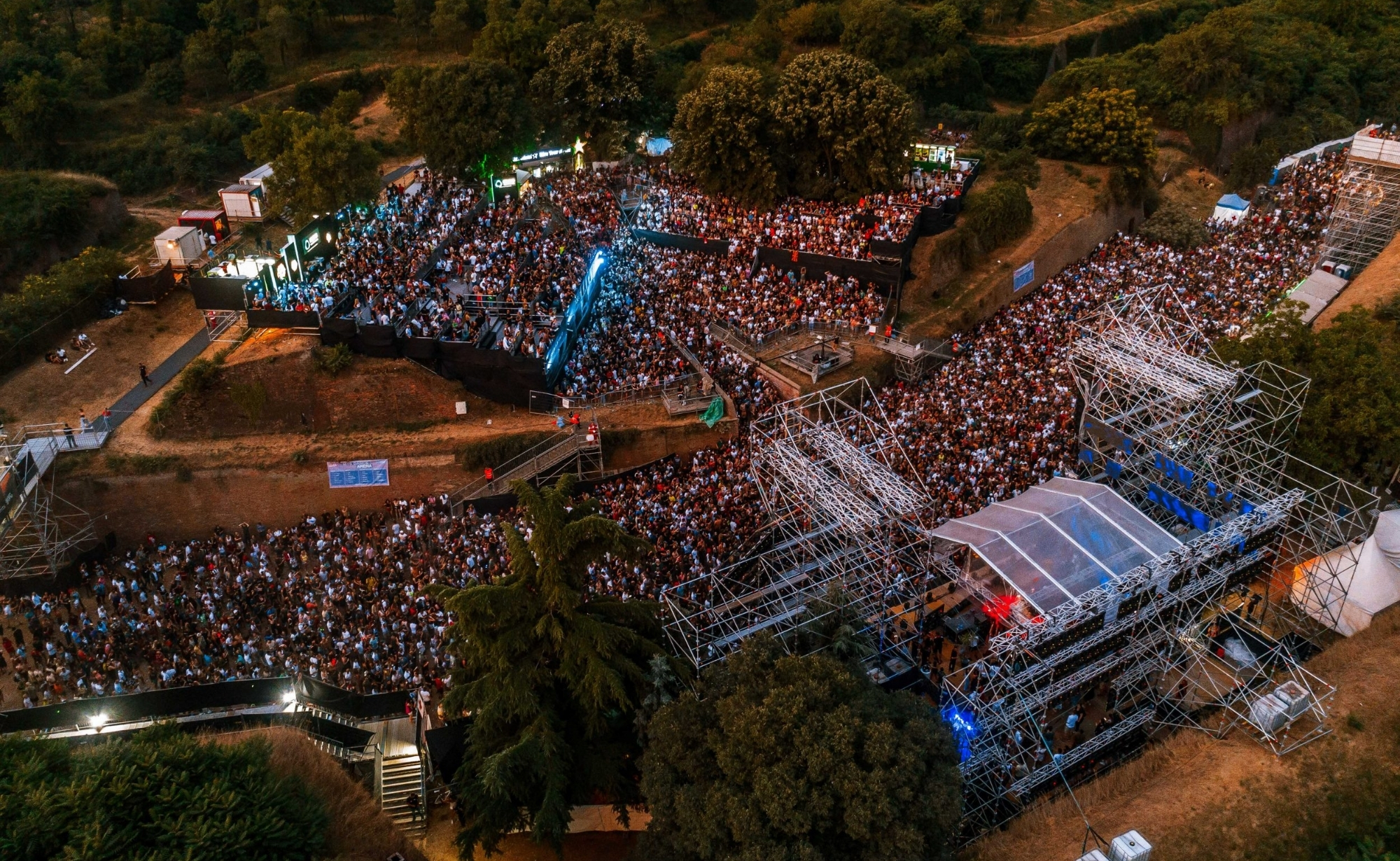
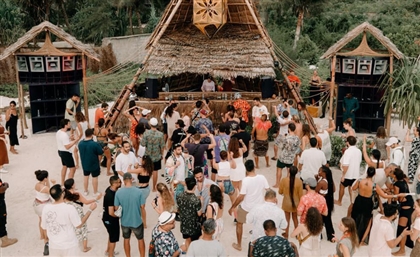
Since its beginnings in the 2000s, EXIT Festival has become something of a rite of passage in Serbia. As a teenager, you saved up birthday and holiday money for a pass to dance for three days straight inside a fortress overlooking the Danube. As an adult, it became a recurring tradition, a reason to spend your holiday days returning year after year with friends, growing into adulthood alongside the festival itself. Solomun’s sunrise sets became legendary (one of which I was lucky enough to experience on my 18th birthday) while The Prodigy’s iconic performances became part of the festival’s mythology.
For many international artists, EXIT marked their first performance in Serbia, while countless local acts found their breakthrough playing to global crowds. There is a special energy to a festival that a live concert or club night can’t quite replicate. Moving between stages and genres, you feel a shared love of music running through everything: strangers dancing in sync, artists feeding off the crowd, and the night unfolding from sunset to stars to sunrise.
After its final chapter in Serbia, EXIT Festival is now stepping onto a global stage, bringing its infectious energy to the rest of the world. One of its stops this October will be Egypt, where it is partnering with MENA electronic music brand and event organiser, P+US, to host Starlight Festival on October 8th-11th. The primary nights will take place on the 9th and 10th at the Great Pyramids of Giza, becoming the first multi-stage festival hosted at the iconic location.
As a lead-up to the festival, SceneNoise speaks with Founder and CEO Dušan Kovačević, reflecting on EXIT’s roots and how that same energy will carry onto the dance floor in Giza.
SceneNoise: EXIT was born out of a very specific historical
moment, rooted in Serbia’s student movement for peace and freedom in 2000. Can you take us back to that beginning?
Dušan Kovačević: The region of the former Yugoslavia was not a happy place in the last decade of the 20th century. We grew up surrounded by cycles of bloody civil wars, world-record hyperinflation, poverty, isolation and a deep feeling that our youth had been stolen from us. For our generation, music was our refuge, an exit from that terrible reality, and that is how the festival came about.
The nucleus of the festival, the so-called 'zero EXIT', took place in University Park in Novi Sad. It was a local event, but in spirit it was much bigger than that. For almost 100 days, thousands of people gathered every day and night around free concerts, parties, theatre plays, cinema screenings and art performances. In a time of fear and darkness, young people created a space of freedom and hope.
EXIT was part of a wider movement for peace and liberation in the Balkans. In our region, nations and religious communities that had been torn apart by war reconnected for the first time at EXIT. People who had been taught to fear or hate each other found themselves dancing together and remembering that friendship was still possible. Many broken bridges were restored, and many new ones were built.
That is why EXIT was never created as just another music festival. From the very beginning, it was a symbol of peace, tolerance, international and interreligious dialogue, hope, and the belief that a better life is possible. It was born from pain and darkness, but our language became love and light.
SN: How did EXIT grow from a student movement into one of the leading festivals in the world, repeatedly awarded the title of Best European Festival?
DK: The roots of the EXIT legend lie in one of the most promising countries of its time, a country that has not existed for decades now. It was the former Yugoslavia, which, together with Egypt and India, was one of the founders of the Non-Aligned Movement, and was widely seen as one of the most desirable countries to live in.
It was the only country in Europe that served as a bridge between the Western and Eastern blocs. During the 1980s, many of the world’s leading music stars performed in Yugoslavia, while MTV and foreign TV programmes were widely available, something almost unimaginable in other communist countries at the time.
Then came the wars and sanctions of the 1990s, and all of that was suddenly and brutally taken away from us. From one of the happiest countries in the world, we fell into something that felt like a horror film.
That is why, when change finally came and we organised the first international music festival in freedom, there was an explosion of energy that had been suppressed for the entire previous decade. The artists who performed felt it deeply, and many of them said their EXIT shows were among the best performances of their careers.
That created a myth, the story spread around the world, and EXIT soon became one of the most sought-after festivals on the planet.
SN: This year, EXIT launched a world tour with Egypt as one of its key stops. What can audiences in Egypt expect?
DK: As we have announced, this will be the first real festival in front of the Pyramids, meaning multiple stages, different genres of electronic music, different energies and a full festival experience.
Festivals are completely different from shows on just one stage. Moving through different spaces and energies, exploring, discovering new sounds and moments, brings a kind of magic that cannot really be described. It has to be experienced and we are delighted and honoured that we have been given the chance to bring this kind of experience to Cairo.
At the moment, we are planning at least 50 artists across 5 stages and different zones. But knowing us, and our partners from Venture, that number could easily grow even more by October.
SN: What excites you most about the Egyptian iteration – musically, culturally, or even symbolically?
DK: What excites me the most is Egypt’s incredible cultural heritage, for which I have immense respect. That is why the social mission of our festival here will be to celebrate the culture and history of Egypt and introduce it to new generations globally.
SN: What feels aligned between the festival’s history and the cultural or musical landscape in Egypt?
DK: What feels very aligned with Egypt is that the scene here is growing organically, from local people who are truly passionate about bringing this culture to Egypt.
That is exactly how we started as well. We learned everything ourselves, through a million mistakes along the way. It was not a multinational company coming in to create a festival. It was local promoters growing organically, driven by passion, belief and love for the culture.
SN: EXIT has always been about bringing the world to Serbia, while also creating a platform for Serbian and regional emerging DJs. As the festival expands globally, how do you imagine its curatorial identity evolving?
DK: As we expand around the world, our talents will have the opportunity to exchange energy and ideas with talents from the countries where we create festivals, and vice versa.
In Egypt, I expect strong creative synergies between the Balkans and the MENA region, and I believe that some globally successful collaborations can come out of that.
SN: For audiences in Egypt who may be encountering EXIT for the first time, what do you hope they understand about the spirit of the festival?
DK: I hope they understand that EXIT is much more than a music festival. It is a movement born from the belief that music can bring people together, heal divisions, and create moments we cherish for years and decades to come.
Many people have told me that EXIT changed their lives, and that is exactly what keeps inspiring us to go further.
Wherever EXIT goes, we do our best to respect the local culture, support local talent, and create a bridge between that place and the world. In Egypt, in front of the Pyramids, that bridge becomes especially powerful, as we connect contemporary music and youth culture with one of the greatest symbols of human civilisation.
- Previous Article SceneNoise x Amsterdam Dance Event Present CROSSFADE: Egypt
- Next Article 95% of Saudi Online Shoppers Buy From Local Retailers